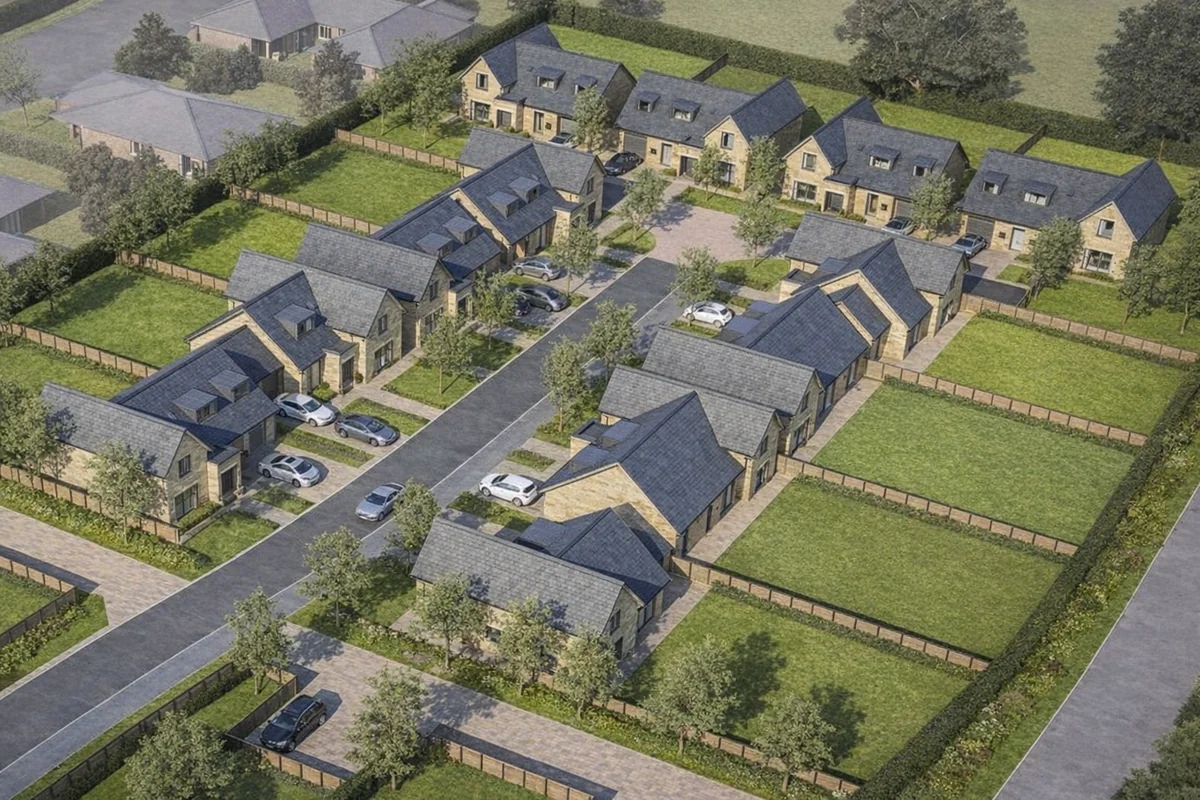
Planning Applications
When submitting a planning application for alterations, extensions, or change of use, accurate existing drawings are a core part of the submission package. The architect uses the survey data to produce the existing and proposed drawings that the local planning authority assesses. Those drawings need to reflect the building accurately — its dimensions, layout, floor areas, and elevations. Without a measured survey, the drawings are built on assumptions, and assumptions create problems at precisely the stage where accuracy matters most.
Permitted development works that fall under certain thresholds can sometimes proceed without a full planning application, but where consent is required, accurate existing drawings are not optional.
Renovations and Refurbishments
Before any renovation or refurbishment work begins, the architect and contractor need to know exactly what they are working with. A measured building survey provides the existing condition drawings that form the basis of the design — wall positions and thicknesses, ceiling heights at every level, window and door openings, structural elements, and the relationship between spaces. It reduces the likelihood of on site surprises, clashes between new and existing fabric, and costly revisions mid build.
Extensions
Whether a building is being extended horizontally or vertically, the proposed works need to integrate precisely with the existing structure. Accurate survey data supports the structural design, the planning drawings, and the construction coordination from the outset. An extension designed without survey data carries the risk of dimensional errors that only become apparent on site — at the point where changes are most expensive.
Listed Buildings and Heritage Properties
Any alterations to a listed building — internal or external — require Listed Building Consent. Conservation officers need to see accurate existing drawings before they will approve proposed works. A measured building survey provides the floor plans, elevations, and sections that underpin the consent application and give the conservation officer a clear record of the building's existing fabric. For a full guide see: Measured Building Surveys for Listed Buildings.
Conversions
Change of use projects — converting a commercial building to residential, a barn to a dwelling, or an upper floor to a flat — require accurate existing drawings to demonstrate the feasibility of the proposed scheme and to support the planning application. A measured building survey captures the existing condition of the building before any design decisions are made.
Structural Alterations
Where structural changes are proposed — removing walls, altering load bearing elements, reconfiguring layouts — structural engineers need reliable existing condition data to assess feasibility and design the works safely. A measured building survey gives them accurate dimensions, ceiling heights, wall thicknesses, and structural features to work from before any calculations are made.
Property Sales, Acquisitions, and Leases
Measured surveys are regularly commissioned during property transactions. Accurate, date stamped drawings give purchasers, investors, landlords, and tenants a clear picture of what they are acquiring — supporting due diligence, informing fit out plans, and providing a reliable record of floor areas for lease negotiations.
Facilities Management and As-Built Records
Following construction or refurbishment, updated as built surveys give facilities managers an accurate record of the completed building. These drawings support ongoing maintenance, compliance, and any future alteration works — particularly where original construction drawings are unavailable, inaccurate, or out of date.
We cover Liverpool, Manchester, Chester, Warrington, Preston, Wigan and the wider North West. For most projects we deliver within six working days of the site visit. Every quote is tailored to the size and complexity of the building — get in touch and we'll come back to you the same day.
Frequently Asked Questions
Do I need a measured building survey for a planning application?
In most cases, yes. Planning applications for alterations, extensions, or change of use require accurate existing drawings as part of the submission. A measured building survey is what produces those drawings.
Do I need a measured building survey for an extension?
Yes. An extension needs to integrate with the existing building precisely. A measured building survey gives the architect and structural engineer accurate existing condition data to design from before the proposed works are drawn up.
Do I need a measured building survey for a listed building?
Yes. Listed Building Consent applications require accurate existing drawings — floor plans, elevations, and sections — showing the building as it currently stands. Conservation officers use these to assess the impact of proposed works on the existing fabric.
Do I need a measured building survey for a conversion?
Yes. Change of use and conversion projects require accurate existing condition drawings to support the planning application and to form the basis of the design.
How early in a project should a measured building survey be commissioned?
As early as possible — ideally before any design work begins. The survey is almost always the first dependency on the project. Design cannot progress until the accurate existing condition drawings are in hand.