We will refund your survey in full, if your drawings arrive after the agreed date or miss any detail from the agreed scope. (terms)
Utility survey and underground service mapping in the North West

Utility Surveys

Locate and map underground services before you dig. Our utility surveys identify gas, water, electric, telecoms and drainage using GPR and EML technology — reducing risk for developers, contractors and engineers across the North West.

Get a Quote

GPR Scanning
Service Location
CAD Utility Maps
Depth & Position Data
GPR Scanning
Service Location
CAD Utility Maps
Depth & Position Data

Start Your Project Correctly

Knowing what's underground before you break ground protects your project, your programme and your people.

Project Assurance

Before any excavation, groundworks or demolition, you need to know what's beneath the surface. Our utility surveys locate and map underground services so your team is working with confirmed information, not assumptions. Getting this right at the outset reduces the risk of strikes, delays and costly design changes.

Protect Your Investment

An undetected service strike can halt a project for days or weeks, generate emergency repair costs and create serious liability. Accurate utility data at the start keeps your programme on track, your costs controlled and your site team safe — protecting the investment from the ground up.

What is a Utility Survey?

Also referred to as utility mapping, underground utility surveys, GPR surveys and cable avoidance surveys

A utility survey locates and maps underground services before any excavation or groundworks begin. Using Ground Penetrating Radar (GPR) and Electromagnetic Location (EML) equipment, we detect and record the position and depth of buried services — gas pipes, water mains, electric cables, telecoms ducting and drainage runs.

The output is a detailed CAD drawing showing the position and estimated depth of all detected services, overlaid on a site plan. This becomes an essential risk management document for any project involving excavation, groundworks or demolition, and is increasingly required by principal contractors and their insurers.

Utility records from statutory undertakers are often inaccurate, incomplete or decades out of date. On-site detection using GPR and EML gives you the confirmed picture that records alone cannot provide.

When would you need a Utility Survey?

A utility survey should be commissioned before any works that involve breaking ground or working near underground services. Common triggers include:
  • Groundworks, excavations or foundation works on any site
  • New drainage or service connections and diversions
  • Demolition works where service runs are unknown
  • Highways and road improvement schemes
  • New development sites and brownfield investigations
  • Pre-purchase due diligence on development land
  • Insurance or liability risk management requirements
  • Validation of existing utility records
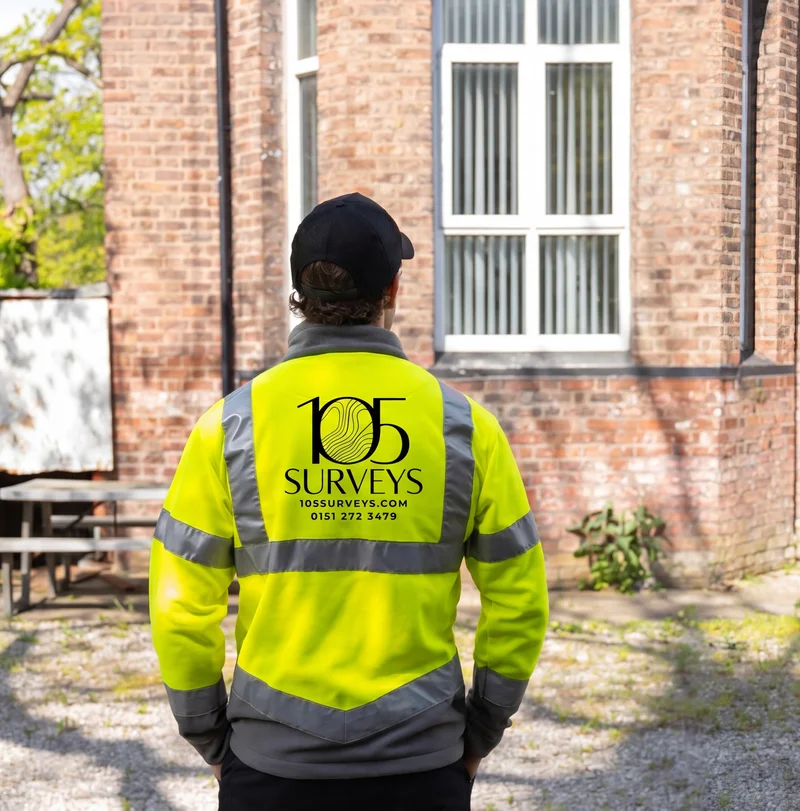
105 Surveys team on site conducting utility survey in the North West

Who Benefits from a Utility Survey?

From site preparation to long-term asset management — utility data protects every party on a project.

Developers

  • You know what's beneath the site before you commit capital to groundworks. Service conflicts that would derail your programme are identified at the earliest possible stage.
  • Undetected service strikes generate emergency repair costs, programme delays and potential legal liability. Accurate utility data keeps those risks off your project before anyone starts digging.
  • You won't be explaining to a funder or planning authority why groundworks have stopped. Everyone is working from a confirmed, documented picture from day one.

Contractors & Principal Contractors

  • Before any operatives break ground, the underground service picture is confirmed. Your team digs knowing what's there and where — not guessing from outdated records.
  • A service strike stops the job, generates emergency call-out costs and creates serious CDM liability. Utility surveys are one of the clearest ways to demonstrate pre-excavation due diligence.
  • You won't be on the wrong end of an HSE investigation or insurance claim because you relied on statutory records that turned out to be wrong. The survey evidence is on file before work starts.

Architects & Engineers

  • You design drainage, foundations and service connections knowing the confirmed position of existing buried services. There are no late-stage clashes when the contractor starts digging.
  • Designing around assumed service positions leads to costly redesigns when reality doesn't match the records. Accurate utility data means those surprises are dealt with on paper, not on site.
  • You won't be asked to redesign under programme pressure because an undetected service was in the way. The CAD overlay sits in your drawing package from the start.

Local Authorities & Highways

  • Road improvement, drainage upgrade and public realm schemes start from a confirmed picture of what's already underground. Design and programme risk is managed from the outset.
  • Undetected services in highway works cause emergency closures, utility reinstatement costs and public disruption. Utility surveys reduce that risk significantly before any section of road is opened up.
  • You won't be dealing with a statutory undertaker dispute about who was responsible for an undetected service. The pre-works survey is the evidence base that protects the authority.

Planning & Environmental Consultants

  • Utility survey data informs drainage strategies, flood risk assessments and infrastructure planning submissions with confirmed service positions rather than assumed records.
  • A planning application or environmental report built on inaccurate utility assumptions can be challenged at any stage. Confirmed survey data means your submissions hold up under scrutiny.
  • You won't be caught out by a highways authority or statutory undertaker raising concerns about infrastructure conflicts that a utility survey would have identified.

Utility Survey Costs

Prices and What to Expect

The cost of a utility survey depends on the size of the site, the scan methodology required, access conditions and the level of reporting needed. Most single-day site surveys start from a day rate of £550 plus VAT, with larger or multi-phase sites quoted individually.

What Affects the Cost of a Utility Survey?

Site Size

Larger sites take more time to scan and more data to process. Multi-day surveys are priced per day with a fixed scope agreed in advance.

Methodology Required

GPR alone, EML alone or a combined approach. More complex underground environments require both technologies to achieve the most complete picture.

Access and Site Conditions

Restricted access, heavily trafficked areas, or dense vegetation can extend survey time and affect the final cost.

Reporting Level

Basic CAD overlays through to full written reports with depth data and confidence ratings are available depending on your project requirements.

Survey Type Price From
Single-day site survey From £550 + VAT
Multi-day / large site Quoted on scope
Combined GPR & EML Quoted on scope

Prices are indicative guides. Final price depends on site size, methodology and reporting requirements. All quotes are fixed price with no hidden extras.

How to Get an Accurate Quote

Tell us the site address, approximate area and what groundworks are planned. We'll confirm the right methodology and give you a fixed price — usually within a few hours.

Get a free quote ›

How Quick is a Utility Survey?

We know programme pressure is real. Here's what to expect on timescales.
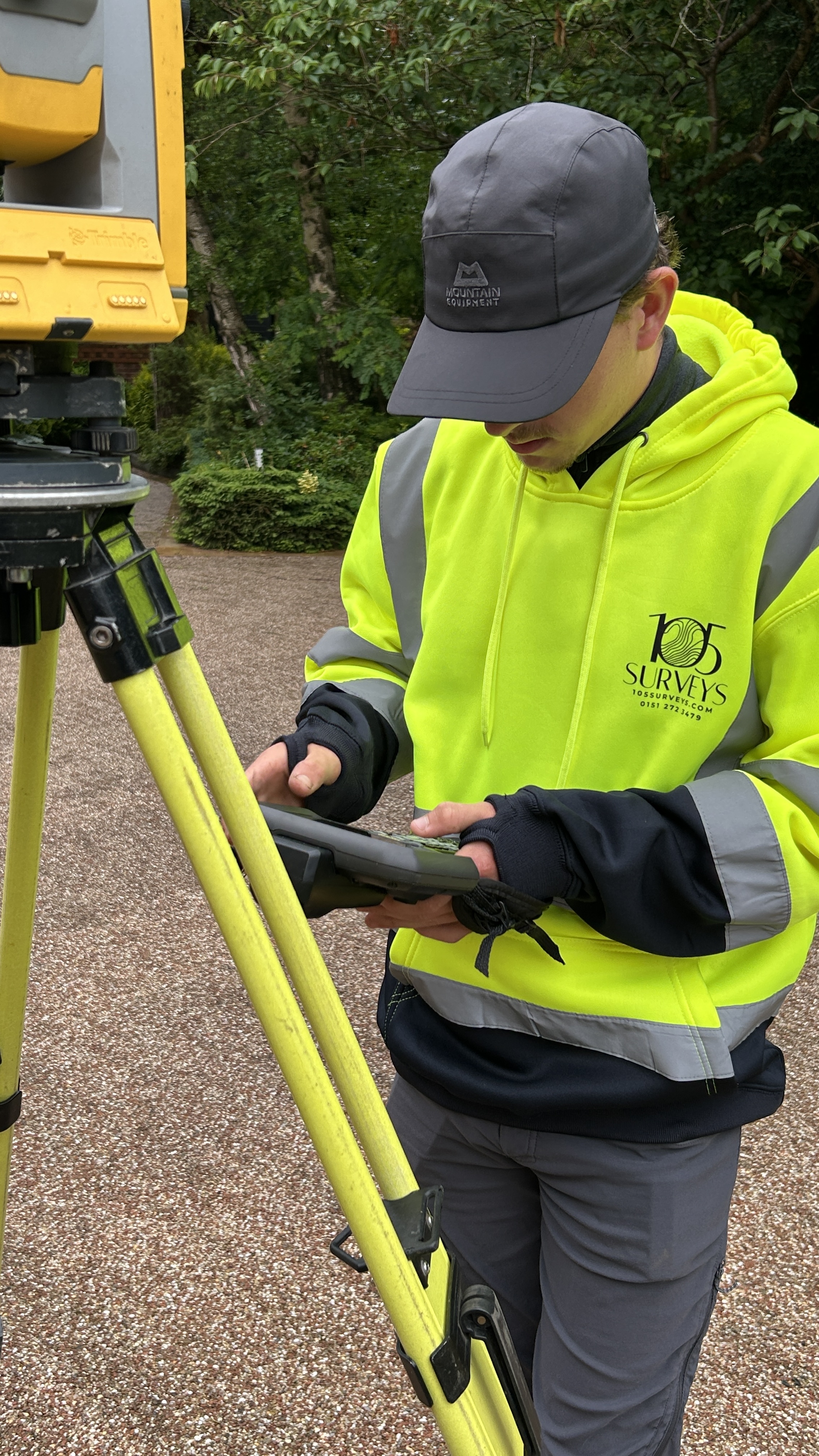
105 Surveys team on site conducting a utility survey

105 Surveys aims to mobilise and deliver as quickly as your programme requires. Most utility surveys are booked within 3 to 5 working days of instruction. CAD deliverables are issued within 3 to 5 working days of the site visit — often sooner.

What you get

  • Site visit booked within 3 to 5 working days of instruction
  • CAD utility map delivered within 3 to 5 days of the site visit
  • Urgent surveys available — ask us when you get a quote

Trusted by developers, contractors and engineers across the North West.

How it Works

From instruction to delivery — four straightforward steps.

1

Consultation

We'll review your project requirements, assess the site and agree the right survey methodology and scope for your needs.

2

We Survey

Our team visits the site with GPR and EML equipment, systematically scanning the area and recording all detected service positions and depths.

3

Data Processing

Survey data is processed and all detected services are plotted onto a CAD base plan, with depth and confidence information recorded.

4

Delivery

You receive a CAD utility map and written report ready to go straight into your project drawings and risk assessments.

Frequently Asked Questions

Ground Penetrating Radar (GPR) uses radar pulses to detect all buried objects and voids, including non-conductive services such as plastic pipes. Electromagnetic Location (EML) locates conductive services by detecting the electromagnetic field they emit or carry when energised. A combined GPR and EML approach gives the most comprehensive picture of what's underground. We advise on the right methodology for each site.
Under CDM 2015, principal contractors and designers have a duty to manage risk including underground service strikes. While a utility survey is not always legally mandated, it is considered industry best practice and is increasingly required by principal contractors, insurers and principal designers before any excavation work begins. Relying on statutory records alone is widely recognised as insufficient.
GPR and EML surveys provide significantly better positional accuracy than statutory utility records, which can be out by metres and often do not reflect later diversions or additions. That said, no utility survey can guarantee 100% detection of all buried services — particularly non-conductive plastic pipes at depth or services with no electromagnetic signature. We provide confidence ratings for each detection in line with best practice guidance.
Most single-site utility surveys are completed in one day on site. Larger sites or those requiring a combined GPR and EML methodology may require additional days. We'll confirm the expected site duration at quote stage so you can plan access and programme accordingly.
Single-day utility surveys typically start from £850 + VAT. Larger sites, multi-day surveys and those requiring a combined methodology are quoted individually. All quotes are fixed price with no hidden extras — contact us and we'll usually come back to you within a few hours.
Yes, and it is often highly efficient to commission both together. A combined topographical and utility survey gives you a complete picture of both the above-ground site features and the below-ground service infrastructure in a single CAD drawing. This is particularly useful for planning applications, feasibility studies and pre-construction surveys. Get in touch for a combined quote.
We deliver utility surveys across the full North West including Liverpool, Manchester, Chester, Warrington, Wigan, Preston, Southport, Blackburn, Bolton, Stockport and the wider region. If your project is outside these areas, get in touch and we'll confirm whether we can help.

Every survey is backed by our Money Back Guarantee and Money Back Guarantee.  Read the full terms ›