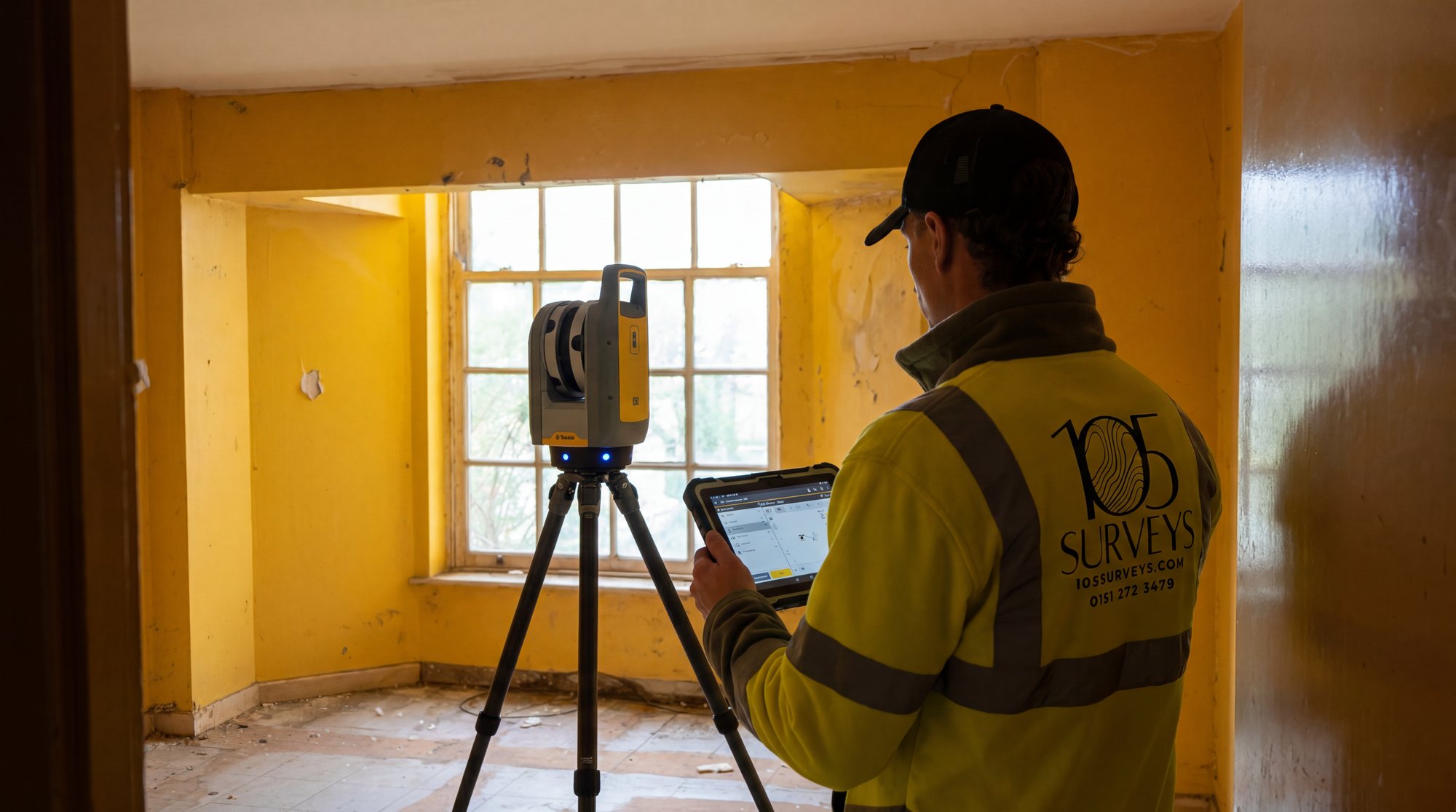
A measured building survey produces a precise existing-conditions record of a building. Every room, wall, window, door, ceiling height, structural feature, and external facade is measured and recorded on site. That data is then processed into a set of CAD drawings — floor plans at every level, external elevations, cross-sections, and roof plans — delivered in the format the design team works in.
It is not an estimate. It is not a sketch survey. The output is an accurate CAD file that architects, structural engineers, and planning consultants can work from with confidence — knowing that the dimensions in the drawing match the building in front of them.
How Is a Measured Building Survey Carried Out?
The building is measured on site using precision equipment. Internal rooms, wall thicknesses, ceiling heights, door and window positions, structural features, and external facades are all captured in detail. That data is then processed into the CAD deliverables: floor plans, elevations, sections, and roof plans.
The result is a set of drawings that accurately reflect the building as it currently stands — not as it was designed, not as it was built decades ago, but as it exists today.
What the Deliverables Include
A measured building survey from 105 Surveys can include:
- Floor plans at every level — room layouts, wall thicknesses, door and window positions and sizes
- External elevations of all facades
- Cross-sections through the building, showing floor-to-ceiling heights and the relationship between levels
- Structural features including columns, beams, and load-bearing elements where visible
- Roof plans showing the roof perimeter, ridges, valleys, hips, and pitches
Drawings are delivered in AutoCAD (.dwg) and PDF.
Who Commissions a Measured Building Survey?
Architects are the most common client. Before any design work can begin on an existing building — a renovation, extension, conversion, change of use, or listed building alteration — the architect needs an accurate record of what they're working with. Designing from approximate measurements or outdated drawings introduces risk at every subsequent stage: structural clash, planning query, on-site discrepancy.
Planning consultants commission measured building surveys as part of preparing planning applications. The existing and proposed drawings submitted to the LPA must be based on accurate survey data, not assumptions.
Structural engineers use measured survey data when assessing existing structures before alteration works. Developers and property owners commission them during acquisitions, when accurate floor areas and building records are needed to support due diligence or inform future plans for an asset.
When Is a Measured Building Survey Required?
A measured building survey is required at the start of any project involving an existing building. The most common situations are:
- Planning applications for alterations or change of use
- Listed Building Consent applications
- Building renovations and refurbishments
- Extensions
- Structural alterations
- Property acquisitions
For a full breakdown, see our guide: When Is a Measured Building Survey Required?
How Is It Different From a Topographical Survey?
A measured building survey records the existing building — its interior and exterior. A topographical survey records the land — its levels, contours, and physical site features. If your project involves an existing building, you need a measured building survey. If it involves land or a new development site, you need a topographical survey. Some projects require both, and in those cases both surveys can often be carried out in a single site visit. Read our full comparison here.
We cover Liverpool, Manchester, Chester, Warrington, Preston, Wigan and the wider North West. For most projects we deliver within six working days of the site visit — confirmed at the point you instruct us, not afterwards.
Frequently Asked Questions
What is a measured building survey?
A measured building survey is a precise, on-site record of an existing building's physical dimensions and layout, delivered as CAD drawings — floor plans, elevations, sections, and roof plans — for use by architects, engineers, and planning consultants.
What does a measured building survey include?
Floor plans at every level, external elevations, cross-sections, structural features, door and window positions, and roof plans. Delivered in AutoCAD (.dwg) and PDF.
How is a measured building survey carried out?
The building is measured on site using precision equipment. Internal and external dimensions, ceiling heights, structural features, and all relevant building elements are captured in detail, then processed into accurate CAD drawings.
Who needs a measured building survey?
Architects, planning consultants, structural engineers, developers, and property owners — anyone who needs accurate existing-conditions drawings of a building before design, planning, or construction work begins.
How long does a measured building survey take?
For most projects in the North West, we deliver within six working days of the site visit. For a residential property, delivery is typically three to five working days. Turnaround is confirmed at instruction.
What is the difference between a measured building survey and a structural survey?
A measured building survey records the physical dimensions and layout of a building and produces CAD drawings. A structural survey assesses the condition of the building — its fabric, defects, and structural integrity. They are different products commissioned for different purposes.
What is the difference between a measured building survey and a topographical survey?
A measured building survey records the building. A topographical survey records the land. If your project involves an existing building, you need a measured building survey. If it involves a development site or new-build land, you need a topographical survey.
How much does a measured building survey cost?
Every project is priced individually based on the size and complexity of the building. Get a quote and we'll come back to you the same day.